
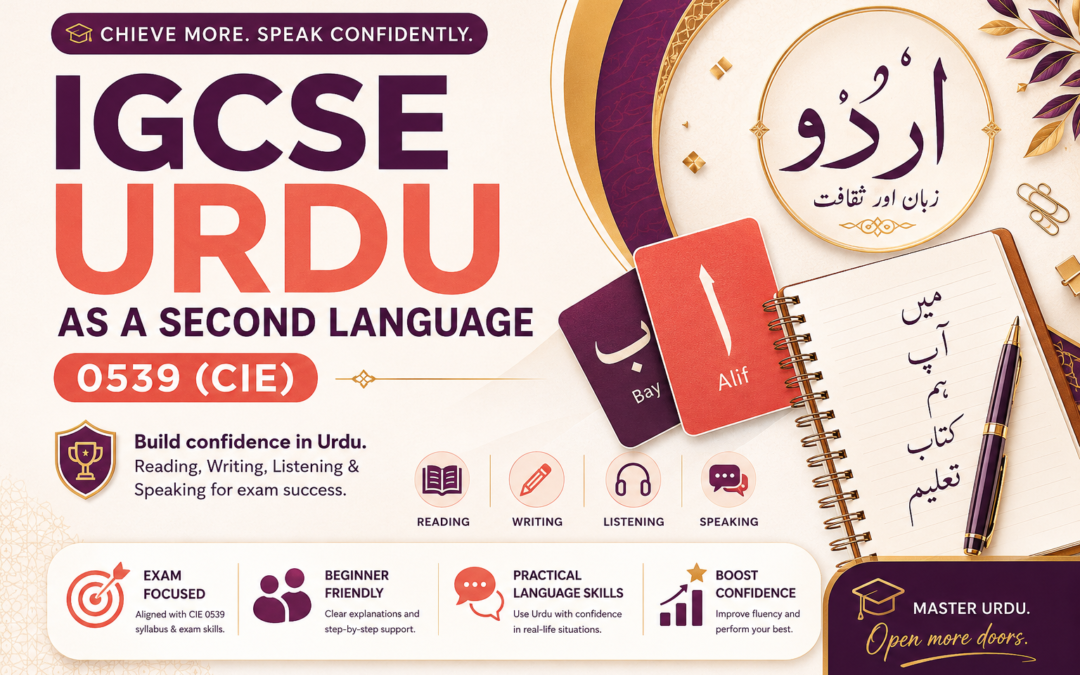
1 Foundations of Urdu and the IGCSE course

1.1 Why study Urdu and how the language is used

1.1 Why study Urdu and how the language is used

1.1.1 The Urdu language, its history and global use

1.1.1 The Urdu language, its history and global use

1.1.1 Vocabulary

1.1.1 Vocabulary

1.1.1 Worked Questions

1.1.1 Worked Questions

1.1.1 Extra

1.1.1 Extra

1.1.2 Learning tools and independent study habits

1.1.2 Learning tools and independent study habits

1.1.2 Vocabulary

1.1.2 Vocabulary

1.1.2 Worked Questions

1.1.2 Worked Questions

1.1.2 Extra

1.1.2 Extra

1.2 Classroom Urdu and learning phrases

1.2 Classroom Urdu and learning phrases

1.2.1 Asking for help, repetition and meaning

1.2.1 Asking for help, repetition and meaning

1.2.1 Vocabulary

1.2.1 Vocabulary

1.2.1 Worked Questions

1.2.1 Worked Questions

1.2.1 Extra

1.2.1 Extra

1.2.2 Common teacher instructions and learner responses

1.2.2 Common teacher instructions and learner responses

1.2.2 Vocabulary

1.2.2 Vocabulary

1.2.2 Worked Questions

1.2.2 Worked Questions

1.2.2 Extra

1.2.2 Extra

1.3 IGCSE skills overview

1.3 IGCSE skills overview

1.3.1 Reading, writing, listening and speaking as connected skills

1.3.1 Reading, writing, listening and speaking as connected skills

1.3.1 Vocabulary

1.3.1 Vocabulary

1.3.1 Worked Questions

1.3.1 Worked Questions

1.3.1 Extra

1.3.1 Extra

1.3.2 Using register, audience and purpose

1.3.2 Using register, audience and purpose

1.3.2 Vocabulary

1.3.2 Vocabulary

1.3.2 Worked Questions

1.3.2 Worked Questions

1.3.2 Extra

1.3.2 Extra

2 Urdu script, pronunciation and numeracy

2.1 Nastaliq writing system

2.1 Nastaliq writing system

2.1.1 Direction, alphabet and letter recognition

2.1.1 Direction, alphabet and letter recognition

2.1.1 Vocabulary

2.1.1 Vocabulary

2.1.1 Worked Questions

2.1.1 Worked Questions

2.1.1 Extra

2.1.1 Extra

2.1.2 Consonants, borrowed sounds and similar letters

2.1.2 Consonants, borrowed sounds and similar letters

2.1.2 Vocabulary

2.1.2 Vocabulary

2.1.2 Worked Questions

2.1.2 Worked Questions

2.1.2 Extra

2.1.2 Extra

2.1.3 Vowels, airaab and vowel positions

2.1.3 Vowels, airaab and vowel positions

2.1.3 Vocabulary

2.1.3 Vocabulary

2.1.3 Worked Questions

2.1.3 Worked Questions

2.1.3 Extra

2.1.3 Extra

2.2 Pronunciation and dialect awareness

2.2 Pronunciation and dialect awareness

2.2.1 Basic Urdu pronunciation

2.2.1 Basic Urdu pronunciation

2.2.1 Vocabulary

2.2.1 Vocabulary

2.2.1 Worked Questions

2.2.1 Worked Questions

2.2.1 Extra

2.2.1 Extra

2.2.2 Consonants in connected speech

2.2.2 Consonants in connected speech

2.2.2 Vocabulary

2.2.2 Vocabulary

2.2.2 Worked Questions

2.2.2 Worked Questions

2.2.2 Extra

2.2.2 Extra

2.2.3 Nuances, intonation and dialects

2.2.3 Nuances, intonation and dialects

2.2.3 Vocabulary

2.2.3 Vocabulary

2.2.3 Worked Questions

2.2.3 Worked Questions

2.2.3 Extra

2.2.3 Extra

2.3 Numbers and numeracy in Urdu

2.3 Numbers and numeracy in Urdu

2.3.1 Numbers 0-100

2.3.1 Numbers 0-100

2.3.1 Vocabulary

2.3.1 Vocabulary

2.3.1 Worked Questions

2.3.1 Worked Questions

2.3.1 Extra

2.3.1 Extra

2.3.2 Numbers 100-10,000 and beyond

2.3.2 Numbers 100-10,000 and beyond

2.3.2 Vocabulary

2.3.2 Vocabulary

2.3.2 Worked Questions

2.3.2 Worked Questions

2.3.2 Extra

2.3.2 Extra

3 Core grammar and sentence building

3.1 Basic sentence structure

3.1 Basic sentence structure

3.1.1 Subject-object-verb order

3.1.1 Subject-object-verb order

3.1.1 Vocabulary

3.1.1 Vocabulary

3.1.1 Worked Questions

3.1.1 Worked Questions

3.1.1 Extra

3.1.1 Extra

3.1.2 Hai, hoon, hain and simple being sentences

3.1.2 Hai, hoon, hain and simple being sentences

3.1.2 Vocabulary

3.1.2 Vocabulary

3.1.2 Worked Questions

3.1.2 Worked Questions

3.1.2 Extra

3.1.2 Extra

3.2 Nouns, pronouns and agreement

3.2 Nouns, pronouns and agreement

3.2.1 Pronouns and formal_informal you

3.2.1 Pronouns and formal_informal you

3.2.1 Vocabulary

3.2.1 Vocabulary

3.2.1 Worked Questions

3.2.1 Worked Questions

3.2.1 Extra

3.2.1 Extra

3.2.2 Gender and agreement

3.2.2 Gender and agreement

3.2.2 Vocabulary

3.2.2 Vocabulary

3.2.2 Worked Questions

3.2.2 Worked Questions

3.2.2 Extra

3.2.2 Extra

3.2.3 Singular and plural forms

3.2.3 Singular and plural forms

3.2.3 Vocabulary

3.2.3 Vocabulary

3.2.3 Worked Questions

3.2.3 Worked Questions

3.2.3 Extra

3.2.3 Extra

3.3 Tense and question formation

3.3 Tense and question formation

3.3.1 Present, past and future basics

3.3.1 Present, past and future basics

3.3.1 Vocabulary

3.3.1 Vocabulary

3.3.1 Worked Questions

3.3.1 Worked Questions

3.3.1 Extra

3.3.1 Extra

3.3.2 Question words and yes-no questions

3.3.2 Question words and yes-no questions

3.3.2 Vocabulary

3.3.2 Vocabulary

3.3.2 Worked Questions

3.3.2 Worked Questions

3.3.2 Extra

3.3.2 Extra

3.4 Accuracy, style and common mistakes

3.4 Accuracy, style and common mistakes

3.4.1 Politeness level and the suffix ji

3.4.1 Politeness level and the suffix ji

3.4.1 Vocabulary

3.4.1 Vocabulary

3.4.1 Worked Questions

3.4.1 Worked Questions

3.4.1 Extra

3.4.1 Extra

3.4.2 Spelling, punctuation and paragraph control

3.4.2 Spelling, punctuation and paragraph control

3.4.2 Vocabulary

3.4.2 Vocabulary

3.4.2 Worked Questions

3.4.2 Worked Questions

3.4.2 Extra

3.4.2 Extra

4 Personal identity, relationships and everyday interaction

4.1 Greetings and introductions

4.1 Greetings and introductions

4.1.1 Basic greetings

4.1.1 Basic greetings

4.1.1 Vocabulary

4.1.1 Vocabulary

4.1.1 Worked Questions

4.1.1 Worked Questions

4.1.1 Extra

4.1.1 Extra

4.1.2 Introducing yourself and others

4.1.2 Introducing yourself and others

4.1.2 Vocabulary

4.1.2 Vocabulary

4.1.2 Worked Questions

4.1.2 Worked Questions

4.1.2 Extra

4.1.2 Extra

4.2 Nationality, language and identity

4.2 Nationality, language and identity

4.2.1 Talking about nationality

4.2.1 Talking about nationality

4.2.1 Vocabulary

4.2.1 Vocabulary

4.2.1 Worked Questions

4.2.1 Worked Questions

4.2.1 Extra

4.2.1 Extra

4.2.2 Language, ethnicity and cultural background

4.2.2 Language, ethnicity and cultural background

4.2.2 Vocabulary

4.2.2 Vocabulary

4.2.2 Worked Questions

4.2.2 Worked Questions

4.2.2 Extra

4.2.2 Extra

4.3 Self, family and relationships

4.3 Self, family and relationships

4.3.1 Self and personal qualities

4.3.1 Self and personal qualities

4.3.1 Vocabulary

4.3.1 Vocabulary

4.3.1 Worked Questions

4.3.1 Worked Questions

4.3.1 Extra

4.3.1 Extra

4.3.2 Family and personal relationships

4.3.2 Family and personal relationships

4.3.2 Vocabulary

4.3.2 Vocabulary

4.3.2 Worked Questions

4.3.2 Worked Questions

4.3.2 Extra

4.3.2 Extra

4.3.3 Everyday social life and informal expressions

4.3.3 Everyday social life and informal expressions

4.3.3 Vocabulary

4.3.3 Vocabulary

4.3.3 Worked Questions

4.3.3 Worked Questions

4.3.3 Extra

4.3.3 Extra

5 Home, school, health and daily life

5.1 Home life and daily routine

5.1 Home life and daily routine

5.1.1 Home life

5.1.1 Home life

5.1.1 Vocabulary

5.1.1 Vocabulary

5.1.1 Worked Questions

5.1.1 Worked Questions

5.1.1 Extra

5.1.1 Extra

5.1.2 School routine

5.1.2 School routine

5.1.2 Vocabulary

5.1.2 Vocabulary

5.1.2 Worked Questions

5.1.2 Worked Questions

5.1.2 Extra

5.1.2 Extra

5.2 Eating, drinking, health and fitness

5.2 Eating, drinking, health and fitness

5.2.1 Eating and drinking

5.2.1 Eating and drinking

5.2.1 Vocabulary

5.2.1 Vocabulary

5.2.1 Worked Questions

5.2.1 Worked Questions

5.2.1 Extra

5.2.1 Extra

5.2.2 Health and fitness

5.2.2 Health and fitness

5.2.2 Vocabulary

5.2.2 Vocabulary

5.2.2 Worked Questions

5.2.2 Worked Questions

5.2.2 Extra

5.2.2 Extra

5.3 Holidays and everyday life

5.3 Holidays and everyday life

5.3.1 Everyday life outside school

5.3.1 Everyday life outside school

5.3.1 Vocabulary

5.3.1 Vocabulary

5.3.1 Worked Questions

5.3.1 Worked Questions

5.3.1 Extra

5.3.1 Extra

5.3.2 Holidays, school holidays and public holidays

5.3.2 Holidays, school holidays and public holidays

5.3.2 Vocabulary

5.3.2 Vocabulary

5.3.2 Worked Questions

5.3.2 Worked Questions

5.3.2 Extra

5.3.2 Extra

6 Places, travel, shopping and the world around us

6.1 Home town and local area

6.1 Home town and local area

6.1.1 Home town and geographical surroundings

6.1.1 Home town and geographical surroundings

6.1.1 Vocabulary

6.1.1 Vocabulary

6.1.1 Worked Questions

6.1.1 Worked Questions

6.1.1 Extra

6.1.1 Extra

6.1.2 Famous cities and sites

6.1.2 Famous cities and sites

6.1.2 Vocabulary

6.1.2 Vocabulary

6.1.2 Worked Questions

6.1.2 Worked Questions

6.1.2 Extra

6.1.2 Extra

6.2 Shopping, clothes and public services

6.2 Shopping, clothes and public services

6.2.1 Clothes and shopping

6.2.1 Clothes and shopping

6.2.1 Vocabulary

6.2.1 Vocabulary

6.2.1 Worked Questions

6.2.1 Worked Questions

6.2.1 Extra

6.2.1 Extra

6.2.2 Public services and local customs

6.2.2 Public services and local customs

6.2.2 Vocabulary

6.2.2 Vocabulary

6.2.2 Worked Questions

6.2.2 Worked Questions

6.2.2 Extra

6.2.2 Extra

6.3 Environment, weather and finding the way

6.3 Environment, weather and finding the way

6.3.1 Natural and man-made environment

6.3.1 Natural and man-made environment

6.3.1 Vocabulary

6.3.1 Vocabulary

6.3.1 Worked Questions

6.3.1 Worked Questions

6.3.1 Extra

6.3.1 Extra

6.3.2 Weather

6.3.2 Weather

6.3.2 Vocabulary

6.3.2 Vocabulary

6.3.2 Worked Questions

6.3.2 Worked Questions

6.3.2 Extra

6.3.2 Extra

6.3.3 Finding the way

6.3.3 Finding the way

6.3.3 Vocabulary

6.3.3 Vocabulary

6.3.3 Worked Questions

6.3.3 Worked Questions

6.3.3 Extra

6.3.3 Extra

6.4 Travel and transport

6.4 Travel and transport

6.4.1 Travel and transport

6.4.1 Travel and transport

6.4.1 Vocabulary

6.4.1 Vocabulary

6.4.1 Worked Questions

6.4.1 Worked Questions

6.4.1 Extra

6.4.1 Extra

6.4.2 Tourism at home and abroad

6.4.2 Tourism at home and abroad

6.4.2 Vocabulary

6.4.2 Vocabulary

6.4.2 Worked Questions

6.4.2 Worked Questions

6.4.2 Extra

6.4.2 Extra

7 Culture, society and the Urdu-speaking world

7.1 Pakistani society and cultural awareness

7.1 Pakistani society and cultural awareness

7.1.1 Major cities, family life and work culture

7.1.1 Major cities, family life and work culture

7.1.1 Vocabulary

7.1.1 Vocabulary

7.1.1 Worked Questions

7.1.1 Worked Questions

7.1.1 Extra

7.1.1 Extra

7.1.2 Dos and donts in Pakistan

7.1.2 Dos and donts in Pakistan

7.1.2 Vocabulary

7.1.2 Vocabulary

7.1.2 Worked Questions

7.1.2 Worked Questions

7.1.2 Extra

7.1.2 Extra

7.2 Food, festivals and important dates

7.2 Food, festivals and important dates

7.2.1 Pakistani cuisine and regional dishes

7.2.1 Pakistani cuisine and regional dishes

7.2.1 Vocabulary

7.2.1 Vocabulary

7.2.1 Worked Questions

7.2.1 Worked Questions

7.2.1 Extra

7.2.1 Extra

7.2.2 National and religious holidays

7.2.2 National and religious holidays

7.2.2 Vocabulary

7.2.2 Vocabulary

7.2.2 Worked Questions

7.2.2 Worked Questions

7.2.2 Extra

7.2.2 Extra

7.3 Media, informal language and cultural expression

7.3 Media, informal language and cultural expression

7.3.1 Media, drama and contemporary resources

7.3.1 Media, drama and contemporary resources

7.3.1 Vocabulary

7.3.1 Vocabulary

7.3.1 Worked Questions

7.3.1 Worked Questions

7.3.1 Extra

7.3.1 Extra

7.3.2 Slang, informal phrases and exam appropriacy

7.3.2 Slang, informal phrases and exam appropriacy

7.3.2 Vocabulary

7.3.2 Vocabulary

7.3.2 Worked Questions

7.3.2 Worked Questions

7.3.2 Extra

7.3.2 Extra

0 Average Rating
Choose Which Reviews You Want to See:
5 Stars 0% (0)
4 Stars 0% (0)
3 Stars 0% (0)
2 Stars 0% (0)
1 Stars 0% (0)

All Reviews

(0)
Full Course
20% Sale
£79.95 £99.99
Course Includes:
1 Enrolled Student
7 Sections
227 Lessons
All levels
Average Rating
0
Based on (0) reviews